DOJ says its largest-ever scam crackdown hit 800+ defendants, and crypto investment fraud was a top target
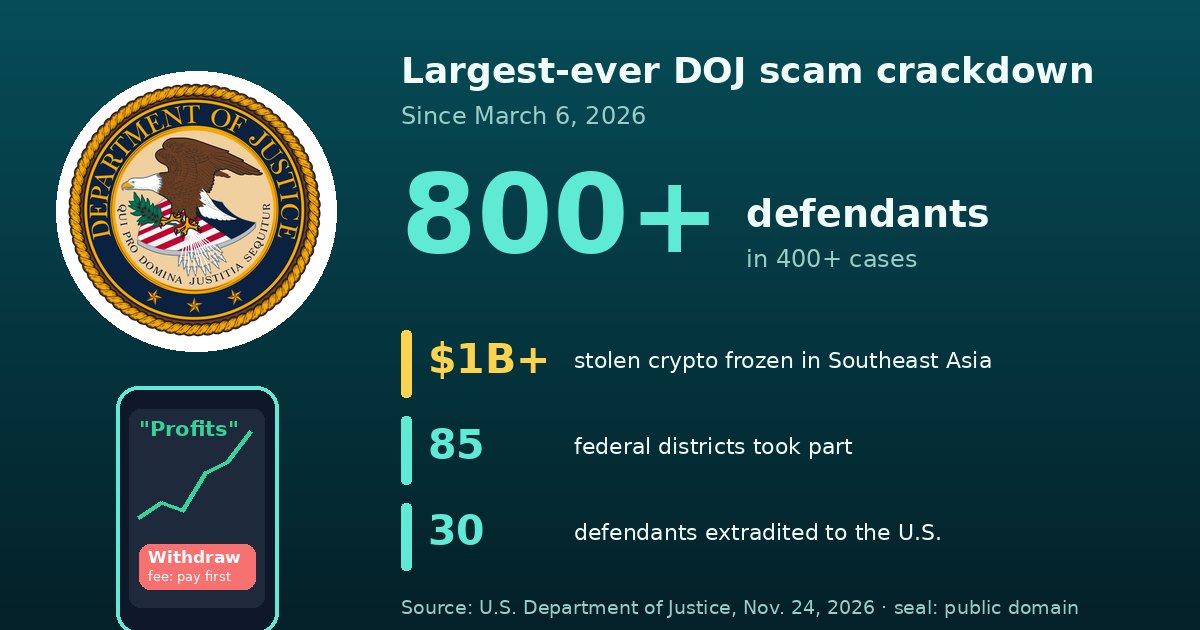
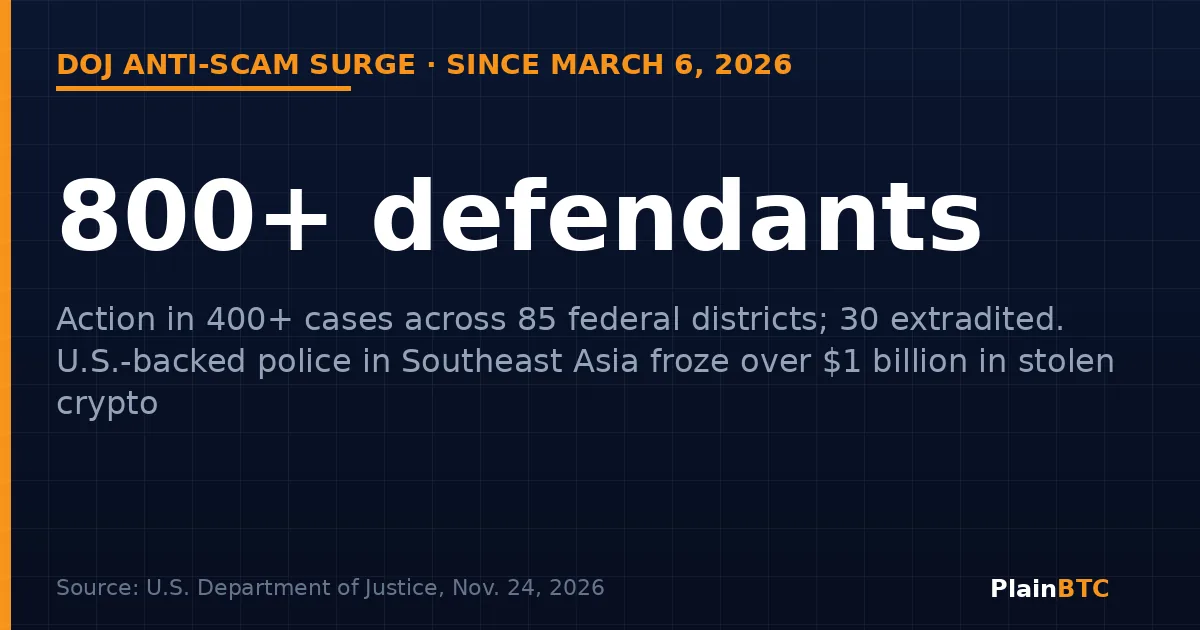
The U.S. Justice Department says it has just finished its biggest push ever against scammers. In an announcement on Tuesday, Nov. 24, it said prosecutors have taken action in more than 400 cases against more than 800 defendants since President Trump signed an executive order on March 6, 2026 calling for a government-wide crackdown on scams.
Crypto sits near the center of it. Fake crypto investment platforms run from scam compounds in Southeast Asia were among the main targets, and U.S.-trained police in that region have helped freeze more than $1 billion in stolen cryptocurrency, according to the State Department figures in the release. The Block and Bitcoin Magazine both highlighted the crypto side of the announcement on Wednesday.
Key takeaways
- The DOJ says it acted in 400+ scam cases against 800+ defendants in 85 federal districts since March 6, 2026, and 30 defendants were extradited to the U.S.
- U.S.-backed police in Southeast Asia have helped freeze more than $1 billion in stolen crypto and take down over 1.4 million fake websites and accounts.
- The FBI says its Operation Blackout has restrained nearly $17 billion in illicit funds and helped dismantle 29 scam compounds.
- Americans lost an estimated $68 billion to scams in 2025, the DOJ said, citing Gallup.
- Charges are allegations. Every defendant is presumed innocent until proven guilty.
What the Justice Department announced
The results come from many agencies working together. The Criminal Division coordinated the surge, with help from the FBI, the Secret Service, Homeland Security Investigations, the Postal Inspection Service, the FTC, the SEC and others.
In the last month alone, the department filed or unsealed charges against more than 30 scam defendants. The cases include crypto investment fraud run from Southeast Asian scam centers, fake "inheritance" fees, sweepstakes schemes aimed at older Americans, and a jury duty scam in which prison gang members allegedly used smuggled phones to demand "fines" from victims.
"Predatory scams against the American people will not be tolerated," Attorney General Todd Blanche said. "The unprecedented results of this surge are just the beginning."
The crypto numbers
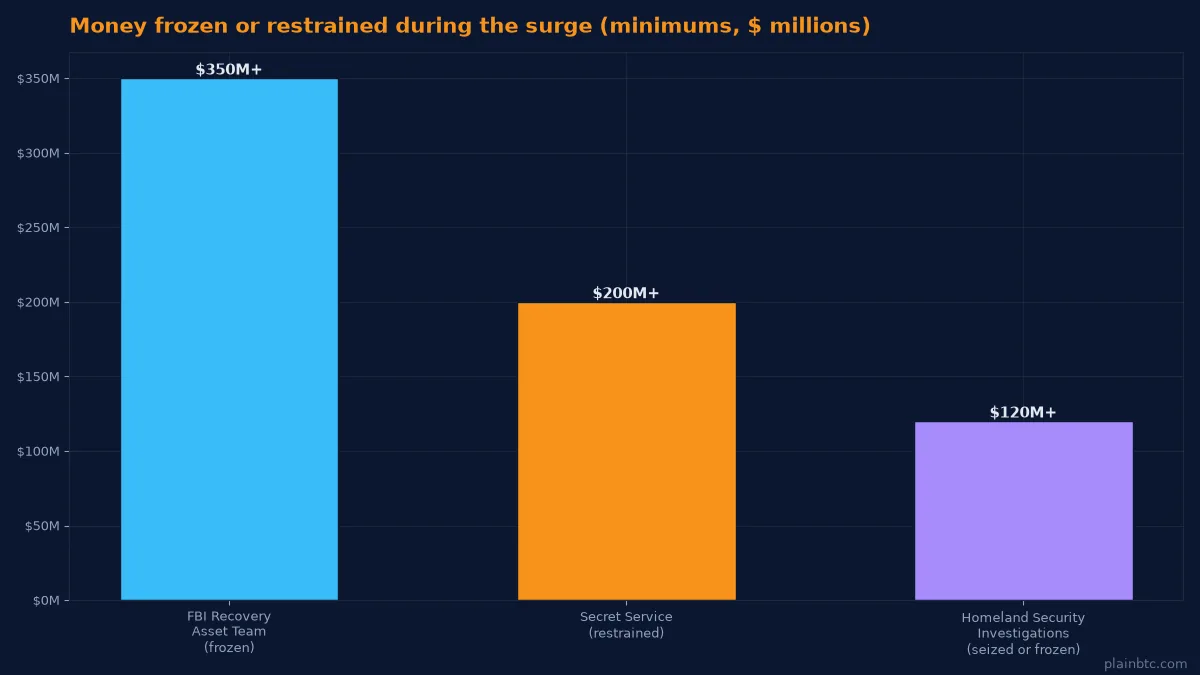
Several agencies reported money they have frozen, restrained or seized during the surge. These are minimums ("more than") and they come from different kinds of cases, so they should not be added together:
- The FBI's Recovery Asset Team froze more than $350 million in assets, and its Operation Level Up prevented more than $143 million in victim losses.
- The Secret Service restrained more than $200 million. One of its cases involves a crypto investment scheme run from scam centers in Cambodia that targeted at least 174 U.S. victims.
- Homeland Security Investigations seized or froze more than $120 million, including money in bank and crypto accounts.
The SEC added that over the past year it charged three supposed crypto trading platforms and four "investment clubs" with taking more than $14 million from retail investors through online confidence scams.
Why this matters to ordinary crypto users
The most common crypto scam is not a hack. It is a person who builds trust over weeks, often through a text message, a dating app or a WhatsApp group, and then steers the victim to a polished "trading platform" that shows fake profits. When the victim tries to withdraw, there are new "taxes" or "fees" to pay. The money is usually already gone.
These schemes lean on crypto because it moves fast across borders. In a June release, the DOJ said Americans reported more than $7.2 billion in losses from crypto investment fraud alone to the FBI's Internet Crime Complaint Center in 2025. Freezing $1 billion is real progress, but it is still a fraction of what has been lost, and returning money to victims takes time.
How to protect yourself
- Be suspicious of any stranger who brings up crypto investing, especially after a "wrong number" text or a new online friendship.
- Only use exchanges you found yourself, such as a large U.S.-regulated platform like Coinbase. Never use a site or app someone else sent you a link to.
- If a platform asks you to pay a fee or tax before you can withdraw, stop. That is a classic sign of a scam.
- Never share your recovery phrase, and never let anyone "help" you through screen sharing.
- If you think you were targeted, report it at ic3.gov. Reports help agents trace and freeze funds.
This is not financial advice.
What to watch next
- Whether more of the frozen crypto is returned to victims through forfeiture cases.
- More extraditions and charges tied to Southeast Asian scam compounds.
- The DOJ's holiday "Share Your Scam Story" campaign, which asks families to talk about scams they have seen.
New to crypto and want to avoid the traps? Start with our guide: is Coinbase safe for beginners?
Bonus Partner offer
Up to$100 in bitcoin
Get up to $100 in bitcoin on River- Create a new River account through this referral link.
- Buy at least $100 of bitcoin with cash from a linked bank account.
- Get $5 in bitcoin, then up to $100 as you buy more within 180 days. U.S. only.
Referral link, we may earn a bonus. Details
Not financial advice. This article is for informational and educational purposes only. It is not investment, trading, legal, or tax advice. Cryptocurrency is volatile and you can lose money. Do your own research and consider speaking with a qualified professional before making financial decisions.
Sources
- U.S. Department of Justice: Justice Department announces largest-ever crackdown on scammers, targeting over 800 defendants (Nov 24, 2026)
- Bitcoin Magazine: DOJ targets 800 defendants in largest-ever scam crackdown, including crypto fraud (Nov 25, 2026)
- The Block: Justice Department takes aim at billions in crypto fraud proceeds in historic 'largest ever crackdown' (Nov 25, 2026)
- U.S. Department of Justice: Justice Department seizes backend infrastructure used by the Huione Group (IC3 crypto investment fraud losses in 2025) (Jun 23, 2026)